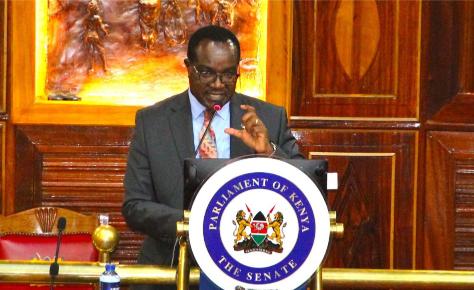
Thousands of teachers who took part in the administration and marking of the 2025 national examinations are set to receive their long-awaited allowances, after the government approved the release of Sh1.5 billion to clear the pending payments.
Education Cabinet Secretary Julius Ogamba said the funds had been secured through the supplementary budget and would be disbursed within the week, ending months of uncertainty for invigilators, supervisors, examiners, and markers who have waited for more than four months.
He acknowledged the delay, linking it to financial constraints, but assured that the ministry had prioritised settling the dues.
“There have been delays in payment due to limited resources. The ministry recognises the critical role played by the professionals in safeguarding the integrity, credibility, and timely delivery of national examinations,” Ogamba said over the weekend.
He added that while some categories, such as casual workers and drivers, had already been paid, teachers and a section of officials were left out due to cash flow challenges. “We pushed for the money to be factored into the supplementary budget, and that has been done. Casuals, drivers, and others have been paid, but the dues for teachers and some officials were delayed. We now have the money.”
The ministry further pledged to prevent similar delays in the future by ensuring that the Kenya National Examinations Council is adequately funded to meet its obligations to contracted professionals.
“I want to assure the professionals that payment of the allowances remains a priority for the ministry. We appreciate their patience, professionalism and continued cooperation and will prioritise settling the payment in the future,” Ogamba added.
The delay had triggered strong reactions from teachers’ unions, which accused the examination council of failing to honour its commitments and warned of disruptions to future exam cycles. Both the Kenya Union of Post Primary Education Teachers and the Kenya National Union of Teachers had demanded immediate payment and threatened to mobilise their members to boycott examination duties.
In a recent interview, Kuppet chairman Omboko Milemba criticised the recurring delays, saying they were eroding trust among teachers. “We demand that Knec pays the teachers who invigilated, supervised and marked national examinations last year. It is sad that the teachers have not been paid many months later,” Milemba said.
“When Knec asks teachers to mark examinations this year, they will not go. The council needs to call a meeting so that we can have a memorandum of understanding on how this will be done.”
Kuppet warned it could advise members to withdraw from marking, invigilation and supervision if the issue is not resolved. “Knec has been underpaying teachers who take part in the administration of national examinations. Worse still, the payment is delayed for months. This is unacceptable,” Milemba said.
Knut Secretary-General Collins Oyuu echoed the concerns, insisting that teachers should be paid promptly after completing exam duties. He cautioned that failure to resolve the matter could disrupt the 2026 examination cycle.
“We will no longer accept delays in payment to teachers who do the noble job of administering and marking national examinations and assessments,” Oyuu said.
“Our members will boycott the invigilation and marking of the 2026 national examinations if the 2025 dues are not paid on time. It is not fair and it is unethical. Knut is not happy with these delays.”
The examination council depends on a large workforce drawn mainly from the teaching profession to run national assessments. For the 2025 Kenya Certificate of Secondary Education exams, 22,247 security officers, 54,782 invigilators, 12,126 supervisors and 10,765 centre managers were deployed.
Another 2,692 drivers were engaged to transport exam materials and personnel across the country. For the Kenya Primary School Education Assessment and the Kenya Junior School Education Assessment, security officers were mainly assigned to escort materials and secure storage points in high-risk areas.
Each KCSE centre had at least two security officers, while 125,492 invigilators, 26,479 supervisors and 24,213 centre managers were deployed for KPSEA and KJSEA. Nearly 45,000 teachers were involved in marking the examinations, highlighting the scale of personnel affected by the delayed payments.






























Comments
Sign in with Google to comment, reply, and like comments.
Continue with Google